Scope and appearance • Repair & Restoration
When is recoloring better than replacing a panel?
Recoloring can restore a broad, stable finish; replacement can be better when the material is missing, structurally weak or impossible to match.
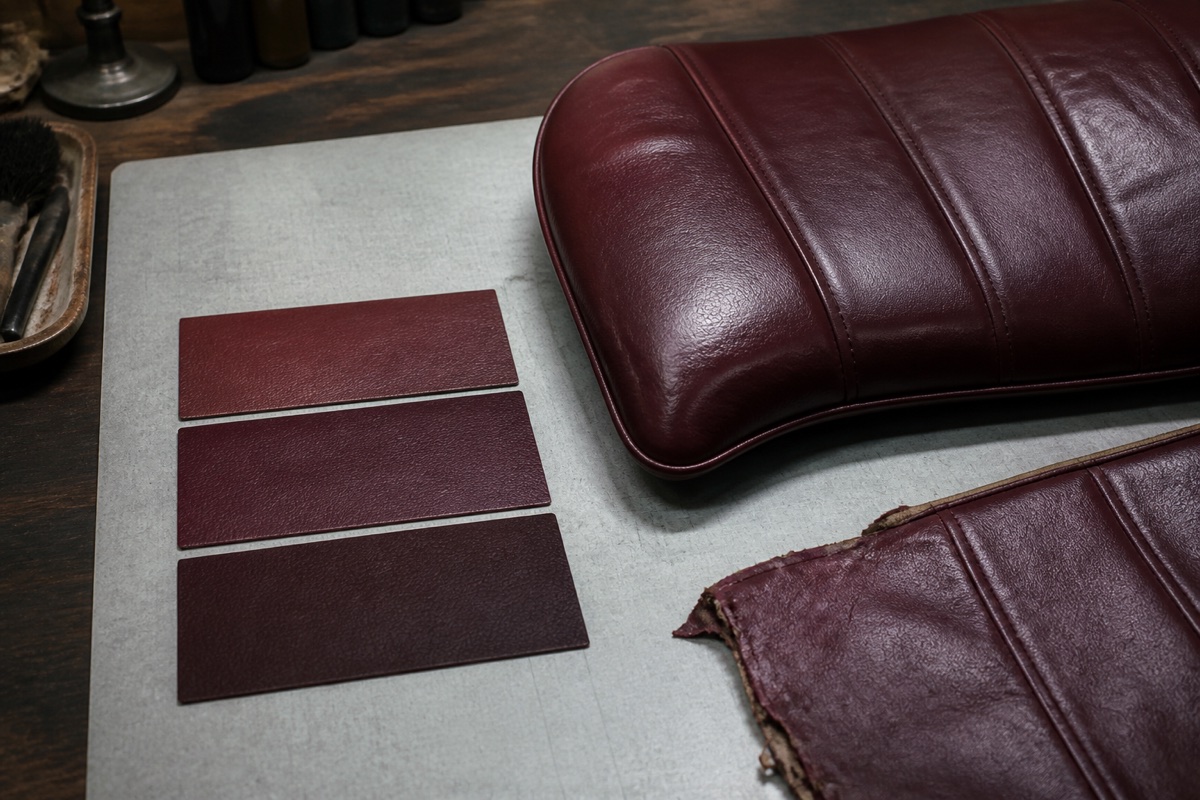
Compare surface stability, panel shape, grain, sheen and the surrounding patina. A fresh color on one panel may be technically sound and still look wrong if the transition is ignored.
Set the appearance standard before work begins. “Like new” and “visually integrated” are different briefs.
A measured sample panel is a better decision tool than a color chip alone.
Recolor only material that can still do its job
For the fuller treatment of that point, see files changes leather interior.
Recoloring can renew a stable visible finish. It does not restore tensile strength, replace missing leather or secure a seam whose holes are tearing through. Flex the area only within normal use and inspect edges, backing and support. If the panel remains strong and the problem is stable color or topcoat loss, refinishing may preserve more original material. If the panel is weak, color can conceal rather than solve the failure.
Map the damaged area against seams, piping, perforations and loaded folds. A broad flat door insert may accept a different approach from a seat bolster. Use the Diagnostic Atlas to state material, finish, symptom and confidence before discussing color. The decision begins with function, not with how dramatic the color contrast appears.
Price the transition, not only the panel
A replacement needs compatible material, thickness, stretch, grain, color and sheen. An exact new match may still stand out beside aged surrounding panels. Recoloring an intact original panel can preserve grain and seam geometry, but the finish must blend across a sensible boundary. In both cases, the transition into untouched material deserves as much planning as the center of the work.
Ask for sample panels under the object's normal daylight and artificial light. Compare dry cured sheen and movement, not a wet color chip. Set whether nearby panels will be blended and how much original variation should remain. A whole-object photograph is the reference; a close swatch alone cannot show visual integration.
Account for contamination and earlier work
Silicone dressings, oils, unknown dyes and earlier coatings can affect preparation and adhesion. Record every known treatment and identify areas that behave differently during controlled cleaning. A local contamination may change a recoloring estimate or make replacement more predictable. Do not conceal that history to obtain a simple quote; it is part of the technical scope.
The professional color-system guide explains why preparation, flexible color and topcoat work together. If testing reveals unstable coating or transfer, establish a stop point before the entire panel is stripped. The project may need to move from color renewal to material replacement as evidence appears.
Choose an honest appearance standard
"Like new" can mean uniform modern color, while "integrated" can mean stable repair that respects surrounding patina. A preserved chair, daily driver and hotel seating set will not share one standard. State the viewing distance, acceptable grain difference, sheen and expected use. Then compare recoloring and replacement against that same brief.
After work, inspect seams, flex points, edge adhesion, transfer and color under more than one light. Keep the sample and formula or material reference. Future maintenance should follow the new system rather than the undocumented habits used before repair. A decision is successful when strength, appearance and future care all make sense together.
Source note: Editorial method. Accessed August 25, 2026.