Crack diagnosis • Repair & Restoration
What is the difference between dry leather and a cracked finish?
Dry feel and visible cracks often appear together, but they are not the same problem.
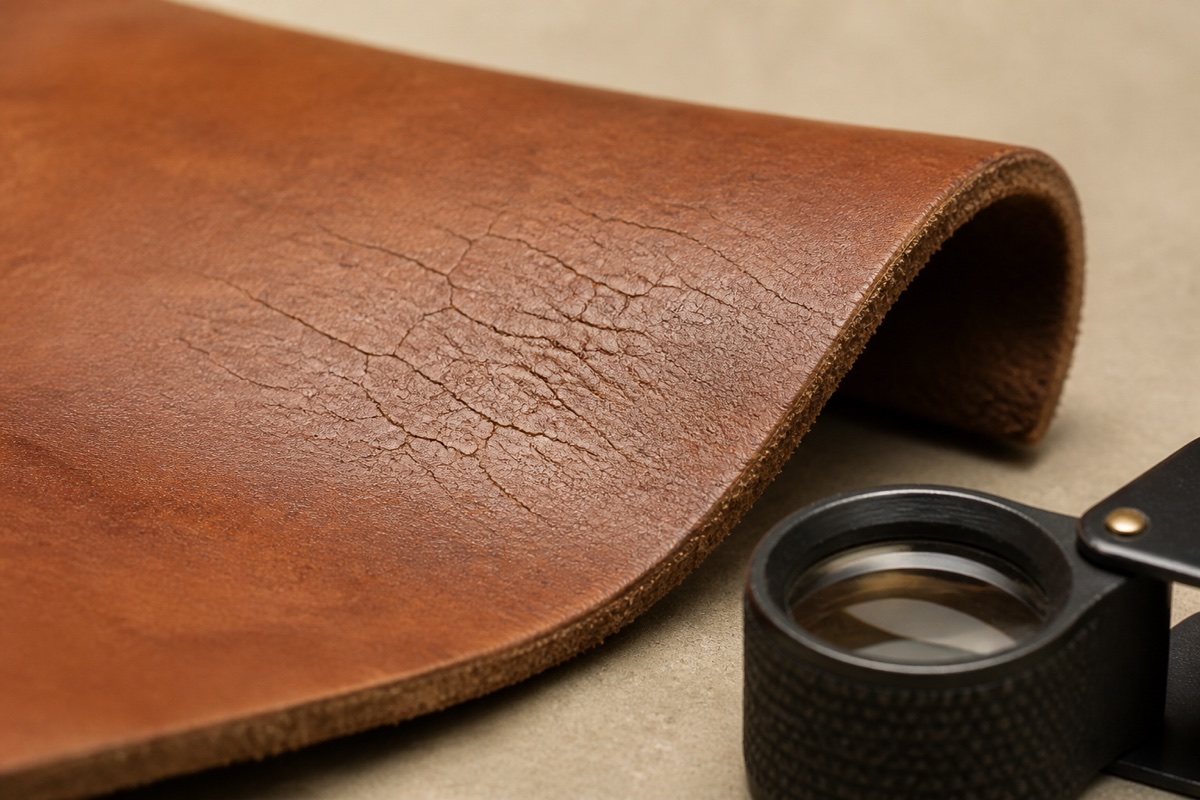
Flex the area gently and compare it with a sheltered section. A coating can crack while the hide remains flexible, while a dry hide can lose resilience under a finish.
Conditioning may change feel without rebuilding a broken coating. Once the surface is open, repair scope and finish matching become central.
Stop before repeated rubbing enlarges the network of cracks.
Crack pattern reveals where to look next
A related working question, treated at length, is auto tuning files changes.
Fine lines confined to the peak of a bend can indicate a coating that has lost flexibility. Broader openings that expose a fibrous layer or change through the leather raise a material-strength question. Random crazing, parallel flex lines and cracks radiating from a seam describe different stresses. Photograph the pattern under low side light and during normal unloaded movement without forcing it open.
Compare an exposed touch point with a sheltered section on the same panel. The sheltered area can show earlier flexibility and finish, but it may also have escaped use and light. Record feel, color, sheen and movement separately. The word dry should remain an observation about feel until evidence connects it to a particular layer or treatment.
Conditioning cannot rebuild a broken coating
A compatible conditioner may alter the feel of some leathers, but it does not bridge a cracked pigment layer or replace exposed grain. Product can collect in open lines, darken them and affect later adhesion. Repeated application may make the surrounding surface softer while the crack remains unchanged, which is not structural improvement.
Review the conditioner and finish distinction before adding anything. If a finish is missing, the likely branch is preparation and professional flexible refinishing after the substrate is assessed. If the leather itself has weakened, a local coating alone can hide the symptom while movement continues beneath it.
Reduce the stress while scope is decided
Limit flex and friction at the damaged area. Move a chair away from direct heat or strong sunlight, avoid sitting on a failing bolster and keep the surface free of rubbing residues. These changes do not repair an opening crack, but they slow the load cycle and preserve cleaner edges. Do not tape the visible face or fill lines with household glue.
Inspect support beneath the cover. Compressed foam or a shifted panel can create a sharp fold that defeats a surface-only repair. On fixed seating, a repairer may need underside access; on a removable cushion, panel construction still sets the method. The reupholstery guide explains when the source of cracking lies below the leather.
Escalate by depth and strength
Stable fine coating checks may be a controlled refinishing question. Lines that catch, open, expose substrate, shed fragments or sit beside torn stitch holes require a repair assessment. Crumbling edges and widespread stiffness can indicate that the surrounding material will not support a local build. In that case, panel replacement may be more honest than a large cosmetic fill.
Ask for the proposed sequence, flex expectation and visible limit. A credible repair should name what remains original, what is stabilized and what finish is renewed. Keep photographs and every prior product with the record. Future decisions depend on knowing whether an oil, cleaner, filler or coating has already entered the cracks.
Source note: Leather Naturally. Accessed August 25, 2026.