Vehicle interiors • Automotive Leather
Auto tuning files: what changes on a leather interior
A practical look at how engine tuning work relates to auto interiors, from ECU remaps to the trim and seating that surrounds the driver.
Engine tuning is a software and hardware discipline that changes how a vehicle delivers power, and it has almost nothing to do with the leather on the seats.
Not through the ECU itself.
Perforated leather on the seat base and the side bolsters is usually first to show wear, because it flexes with every entry and exit.
What does engine tuning actually change?
Engine tuning is a software and hardware discipline that changes how a vehicle delivers power, and it has almost nothing to do with the leather on the seats. The two meet only at the edges: heat, vibration, and the way a modified car is used can all shorten the life of interior materials. For owners weighing a remap, the useful question is not whether tuning damages leather, but which driving and maintenance habits a tuned car encourages.
A remap rewrites the calibration tables inside the engine control unit. Those tables govern injection timing, boost pressure, ignition advance, and torque limits. On a turbocharged diesel or gasoline engine, a stage 1 file typically raises torque in the mid range without changing hardware. Higher stages add intercooler, turbo, or exhaust work, and the calibration is adjusted to match. The physical result is more heat under the hood, more load on the driveline, and a different torque curve.
None of that touches the cabin directly. What changes is the duty cycle: a tuned car is often driven harder, and harder driving means more heat soak into the floor pan, more vibration through the seat frames, and more UV exposure if the car sits outside between runs. A French-language blog on engine remapping in Metz, engine remap work in Moselle, covers stages 1 to 4, OBD, Bench and Boot reading methods, dyno testing, and DSG gearbox behavior, which is the kind of reference an owner needs before deciding on a file. The interior implications are indirect but real.
Does a remap affect the leather or the seats?
Not through the ECU itself. Leather, foam, and stitching respond to temperature, humidity, friction, and load, not to calibration data. A tuned engine can still influence all four. More torque means the driver sits deeper in the seat under acceleration, which compresses foam and stresses seam threads over time. A car that runs hotter sends more radiant heat through the bulkhead and transmission tunnel, and that heat reaches the lower cushion and the console trim.
There is also the question of how the car is used after tuning. A remapped diesel used for towing or long motorway runs will accumulate heat cycles differently from a standard car. If the interior is leather, those cycles show up as drying, slight shrinkage at the seams, and a duller finish on bolsters. The fix is ordinary care: condition the leather more often in summer, keep the cabin ventilated, and avoid leaving the car parked in direct sun after a hard drive.
Which interior materials age fastest in a tuned car?
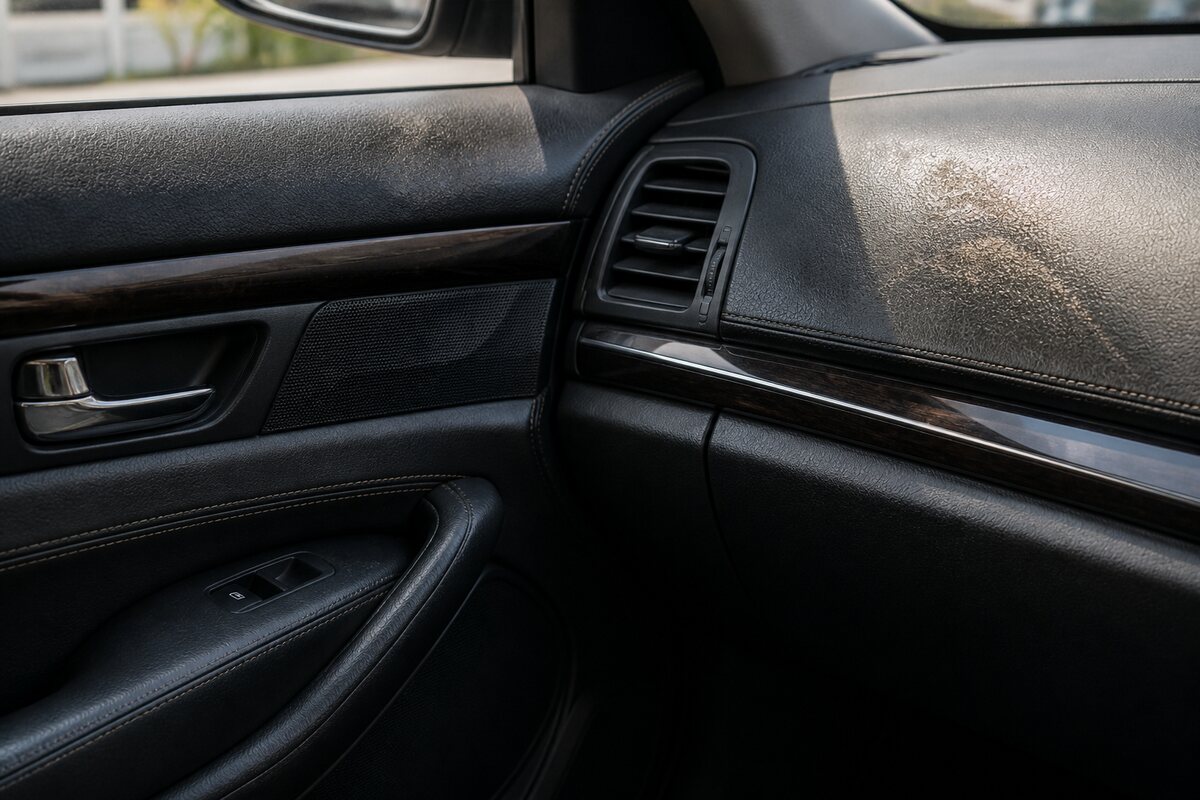
Perforated leather on the seat base and the side bolsters is usually first to show wear, because it flexes with every entry and exit. Next comes the steering wheel rim, especially on cars with a lot of mid-range torque, since the driver grips harder under acceleration. Then the gear lever and handbrake gaiters, which see more movement in a car driven enthusiastically.
Smooth full-grain leather on door cards and dashboard tops ages more slowly, but it is more sensitive to UV. A tuned car that spends weekends on track or on long rural routes will fade those surfaces faster than a commuter car. Fabric and Alcantara behave differently again: they abrade rather than dry out, so bolsters go shiny before they crack.
How does tuning change the way a car is driven?
A remap does not change the driver, but it changes the feedback the driver receives. More torque at low revs means earlier upshifts in normal driving, which reduces engine noise and can make the cabin feel calmer. It also means the car reaches higher speeds more easily, and that raises wind noise, tyre roar, and the amount of time the interior spends at temperature.
On a DSG-equipped car, a remap is often paired with a gearbox calibration change. That alters shift points and clutch pressure, which affects how the car pulls away from rest. Smoother or firmer engagement changes the load on the seat frame and the floor mounts, though the effect is small compared with the effect of driving style. Owners who tow, or who carry passengers regularly, tend to notice interior wear sooner simply because the car is working harder more often.
What should an owner check before and after a remap?
Before any calibration work, the car should be mechanically sound. A diagnostic scan, a check of the intake and exhaust, and a look at the clutch or gearbox condition are standard. After the work, the owner should watch for heat-related symptoms: a hot transmission tunnel, a warm seat base, or a smell of hot trim after a hard drive. Those are signs that the car is running at a different thermal load, not that the leather is failing.
For the interior, the practical routine is unchanged. Clean leather with a pH-neutral product, condition it two or three times a year, and keep it out of direct sun when possible. Tuned cars benefit from the same schedule, with one addition: after a long or hard drive, let the cabin air out before parking, so heat does not sit in the seats and trim.
Where does the local context matter?
In Moselle, the mix of motorway, rural road, and industrial traffic shapes how a tuned car is used. A remap for towing or for heavy loads puts different demands on the driveline than a remap for a weekend car, and the interior reflects that. The same blog covers pricing in Metz, local preparers, customer feedback, manufacturer warranty questions, insurance, periodic technical inspection, and returning a car to stock before resale. Those are the practical questions that sit alongside any interior care routine.
For an owner, the sensible sequence is to settle the mechanical and legal questions first, then treat the interior as a wear item with its own schedule. Leather does not care about horsepower, but it does care about heat, friction, and time. A tuned car simply asks the owner to pay attention to all three a little more often.
Source note: Editorial method. Accessed August 25, 2026.