Material identification • Leather Types
How should coated vinyl and corrected grain enter a diagnosis?
A surface’s look does not prove its material. Coated vinyl and corrected grain can both present a uniform printed texture.
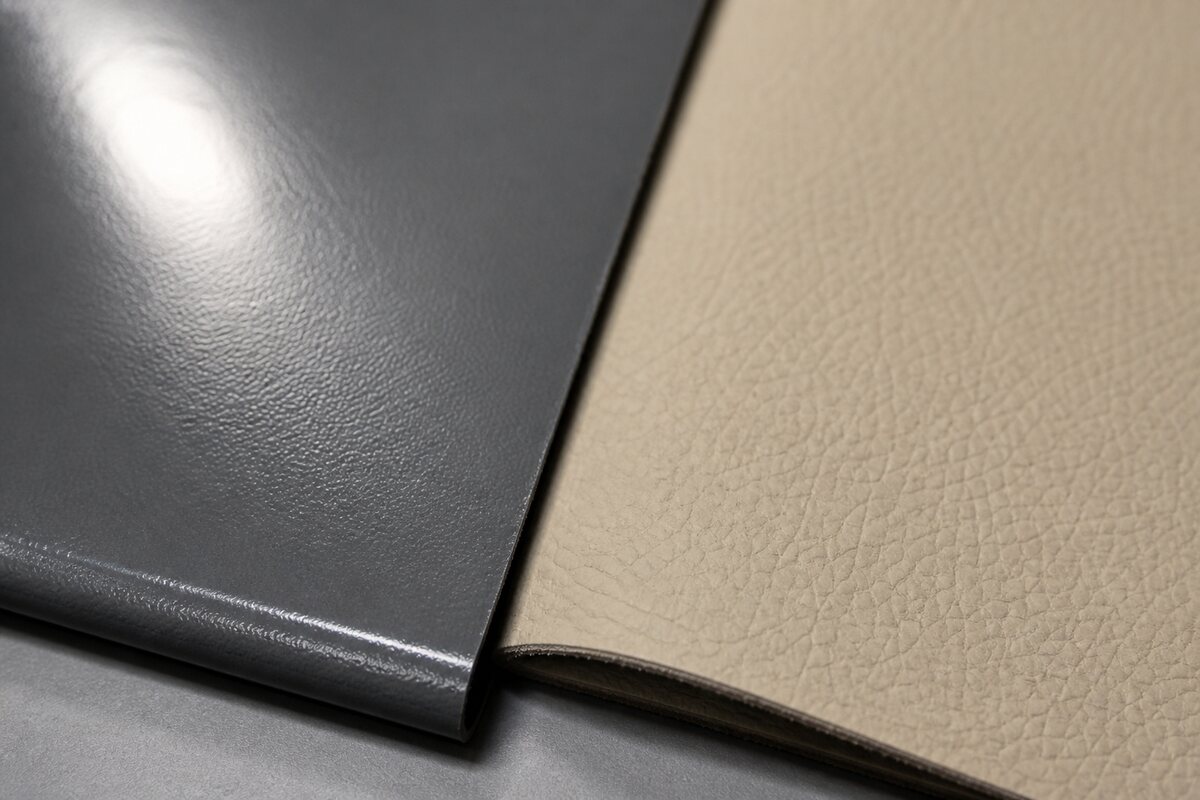
Check edges, flex, backing, pores and the way a finish reacts to a small controlled test. Corrected grain has been altered and finished; coated vinyl is a different substrate with different bonding behavior.
A product chosen from a color match alone can fail at flex points or leave an incompatible sheen.
When the substrate is uncertain, treat identification as the first repair step.
A printed grain can sit on different substrates
For the fuller treatment of that point, see household wisdom where start.
Coated vinyl is a polymer-based upholstery material. Corrected-grain leather begins with hide whose surface has been altered and finished, often with an embossed texture and pigment. Both can look uniform, repeat a grain pattern and resist a quick visual guess. The difference matters because bonding, flex, heat response and repair coatings depend on the substrate beneath the visible print.
Do not use smell, a burn test or a visible-face scratch as identification. Read labels and specifications, inspect an existing accessible edge, compare backing and note how the panel is constructed. A natural-looking irregularity can be embossed, and a leather panel can carry a substantial coating. The useful outcome is a confidence level, not a performance of certainty.
Inspect edges and flex without creating damage
An already exposed seam allowance or removable sample can show thickness, fiber structure and backing. Vinyl may reveal a textile support beneath its coating; corrected leather retains a leather fiber structure. Do not cut an installed panel to find out. Watch ordinary flex at a seat edge and note whether cracking sits in the coating, follows a backing pattern or exposes a distinct layer.
Use the Diagnostic Atlas to record material as confirmed, probable or unknown. That field should remain visible when treatment is discussed. A compatible cleaner for an intact coating may not answer an adhesive repair, and a color match says nothing about whether the system will flex with the substrate.
Match products to construction
Check the product maker's intended substrates, preparation, cure and exclusions. Adhesives, fillers and coatings must move with the panel and bond to the actual layer being repaired. A rigid fill can form a new stress line; a strong solvent can soften or lift a polymer coating; an oily dressing can obstruct later adhesion. Hidden testing should use a representative intact area and remain small.
The patch and adhesive guide separates backing, edge transition and surface finish. If material identity stays uncertain, send a sample or the item information to a qualified supplier rather than selecting from a photograph. Compatibility is a system question, not a contest between product claims.
Describe the material honestly when buying
Ask sellers to distinguish leather, leather-coated split, bonded material and synthetic upholstery in the specification. General words such as premium, leather-look or genuine do not explain the surface system. Request intended use, abrasion context, care method and repair support. A practical coated material can be a good choice when it is named accurately and matched to the application.
Keep a sample and specification with large furniture or vehicle projects. Future repairers can compare grain, color, backing and finish without taking material from the object. If a panel begins to peel, delaminate or crack across a repeating pattern, preserve loose fragments for identification and stop applying dressings that may contaminate the remaining surface.
Source note: Leather Naturally. Accessed August 25, 2026.