Dry-climate homes • Furniture & Upholstery
Leather in a Dry-Climate Ranch House
How leather furniture behaves in a dry inland climate, what to check before buying, and how ranch architecture shapes the choice.
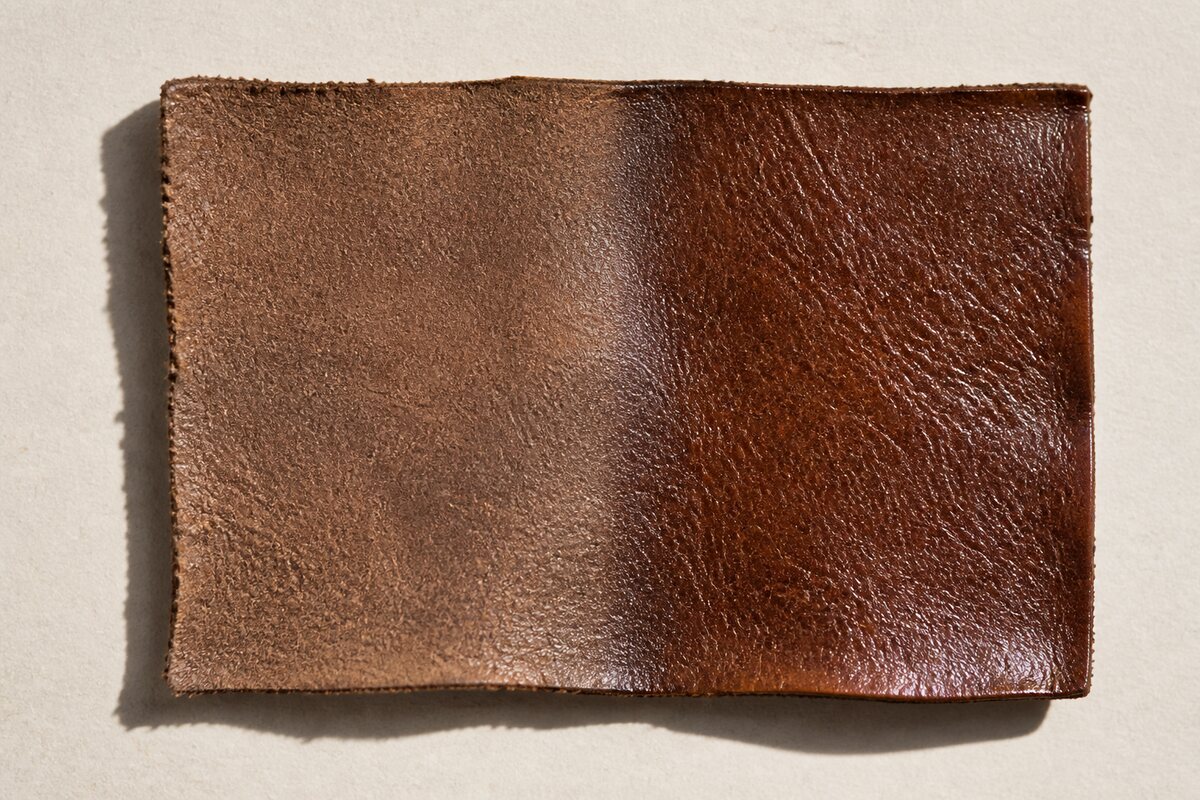
Leather furniture in a dry inland climate needs more attention to humidity than to heat.
Start with the seams, not the cushions.
The California ranch house and the Spanish Colonial Revival houses that Lilian Rice designed in this area share a set of moves: deep roof overhangs, small or recessed windows on the hot exposures, thick walls, and floors that run continuous
Why does leather behave differently in a dry inland climate?
Leather furniture in a dry inland climate needs more attention to humidity than to heat. A house that swings between damp coastal mornings and bone-dry afternoons puts hides through a slow cycle of swelling and shrinking, and that cycle, not sunlight alone, is what shortens the life of a sofa. Buyers touring ranch properties should look at the leather already in the house before they look at the view.
Relative humidity, not temperature, drives most of what happens to a hide. Leather is a collagen network that holds a percentage of water in equilibrium with the air around it. When indoor humidity drops into the twenties, that water leaves, the fibers pull tighter, and the surface loses some of its suppleness. When humidity climbs back, the fibers relax again. Repeat that daily for a decade and the material fatigues in ways a coastal house never sees.
Rancho Santa Fe sits in a band where this matters. Inland valleys in north San Diego County can run hot and dry through the afternoon and cool sharply at night, and the marine layer does not always reach that far inland. A house with wide eaves and thick walls moderates the swing; a house with a wall of west-facing glass does not. The building envelope, not the furniture, sets the terms.
For readers weighing a move to this kind of setting, the local market coverage at Rancho Santa Fe homes treats climate and architecture as part of the same purchase decision rather than separate topics. That framing is useful here: the leather question is really a building question.
What should a buyer check on existing leather in a house?
Start with the seams, not the cushions. Stitching is where dryness shows first, because thread and hide shrink at different rates. Run a hand along a seam and look for a fine white line where the finish has cracked away from the stitch holes. That line means the surface coating has lost elasticity, and reconditioning will slow it but not reverse it.
Then check the high-contact zones: the front edge of the seat cushion, the top of the back cushion, and the arm where hands rest. These are the places where body oils, sunscreen, and abrasion combine. A dark, glossy patch on an otherwise matte hide is not patina in the flattering sense; it is soil pushed into the grain.
Ask when the piece was last conditioned and with what. A hide that has been fed with a heavy oil product can feel tacky and attract dust, which is its own problem. A hide that has never been touched in fifteen years in a dry house is likely stiff at the flex points.
Finally, look at the frame and the deck under the cushions. Dry air is hard on wood too, and a sofa that has been sitting in a low-humidity room for years may have loose joints that have nothing to do with the leather.
How do ranch interiors change the way leather ages?
The California ranch house and the Spanish Colonial Revival houses that Lilian Rice designed in this area share a set of moves: deep roof overhangs, small or recessed windows on the hot exposures, thick walls, and floors that run continuously from room to room. Each of those moves changes what leather experiences.
Deep eaves cut direct sun on the upholstery, which protects the finish from ultraviolet damage. Thick walls buffer the daily humidity swing, which slows the shrink-and-relax cycle. Continuous flooring means a sofa often sits in a space that is open to a hallway or a garden room, so the piece is exposed to whatever the whole house is doing rather than to one controlled room.
That last point cuts both ways. An open plan keeps a sofa out of a single stuffy corner, but it also means a kitchen or a mudroom can push humidity around the house. In a ranch layout, the leather near the garden door takes the worst of it.
When does a leather project become reupholstery?
The line is usually the deck and the frame, not the hide. If the springs, webbing, or foam have collapsed, no amount of conditioning will bring the seat back, and the piece needs to come apart. If the frame is sound and only the surface is tired, a hide can often be cleaned, conditioned, and recolored in place.
Cracking that has gone through the finish into the grain is the other threshold. Surface cracks can be filled and blended. Cracks that open when the cushion flexes mean the fiber structure has broken down, and a patch or a panel replacement is the realistic option.
For a house with several leather pieces, it helps to date them. A sofa from the 1990s and a chair from the 2010s were finished with different chemistry, and they will respond differently to the same product. Treating them as a set is a common mistake.
What does the local market expect from a leather interior?
In the upper tier of this market, buyers read leather as a signal about how a house has been kept. A cracked, dry sofa in an otherwise well-maintained house raises a question about what else has been deferred. A hide that is soft, even in color, and free of glossy patches reads as a house that has been lived in carefully.
That does not mean every buyer wants leather. Families with young children and dogs often prefer a performance fabric, and in a dry climate the static and dust that leather can attract are real annoyances. The honest position is that leather is a maintenance commitment, not a low-maintenance choice, and in a dry inland house the commitment is larger than it is near the coast.
Sellers preparing a house for the market should treat leather the way they treat wood floors: clean it, condition it lightly, and fix the seams that have opened. Over-oiling before a showing is a mistake, because a tacky surface photographs badly and feels worse.
How should leather be maintained through the seasons?
The seasonal rhythm in this part of the county is roughly: a cooler, damper stretch in late spring and early summer when the marine layer reaches inland, a hot dry stretch in late summer and fall, and a winter that can bring dry Santa Ana winds. Each phase asks something different.
During the damp stretch, watch for any musty smell near the seams and keep air moving through the room. During the dry stretch, a light conditioning once or twice is usually enough; more than that can leave residue. During wind events, dust is the main enemy, and a dry microfiber cloth does more good than any product.
Humidity control is the real lever. A whole-house system held in a moderate range does more for a leather sofa than any conditioner on the market. Where that is not possible, grouping furniture away from the hottest exposure and using window coverings during the afternoon will extend the life of the finish.
For anyone comparing properties, the practical test is simple: sit on the leather in the house you are considering, in the afternoon, and notice whether it feels stiff or supple. That single impression tells you more about the building than the listing sheet does.
Source note: Editorial method. Accessed August 25, 2026.